AN INSIGHT
AI is rapidly taking over efficiency, analysis, and operational cleverness. If that's the game you're in, it's natural to wonder how long it will stay defensible.The companies that quietly keep compounding don't compete on specs or performance. They compete on how it feels to be their customer, partner, or employee — on human experience, meaning, and taste.That feeling is not accidental. It is structural.Design-led firms that embody this have outperformed the S&P by more than 200% over a decade-long study.Their builders are POETPRENEURS — entrepreneurial creatives who architect experiences rather than optimize operations. They wire their organizations around Human first, Innovation second, Structure third — so that what the company builds and who the company is move in the same direction. Most organizations do the reverse, and the gap between their product and their culture widens quietly until scale makes it visible. In an AI era, that gap is no longer a brand problem. It is an existential one. The companies that will define this era are not the ones that resist AI — they are the ones that have designed how their human judgment and their AI capability work together.If you lead a product or organization and quietly suspect your current model is wired for the world AI has surpassed, you're already asking the right questions.Work with Siamak
the poetry
POETPRENEURS are entrepreneurial creatives — often outside STEM and traditional business schools — who notice what others overlook.They architect ventures around human experiences that are hard to measure but impossible to ignore once you feel them. Where most teams optimise for efficiency, POETPRENEURS design for experience. That's the poetry, the edge — and it's the one thing AI can't replicate.Underneath that intuition is an organic blueprint. Design-led companies build three pillars in the right order — Human, Innovation, and Structure — so that what the organization is and what it builds move as one instinct. Most organisations do the reverse, then wonder why execution feels like pushing rope, why their best people drift, and why what was once remarkable is now merely another option.You may recognize yourself here. You sense drift before the data names it. Your best decisions came from human instinct you then had to translate for the room. You care about what the experience means to the person living it — not just what it does. You live between worlds — technical and human, specialist and synthesizer — and in an era where AI has made depth abundant, range is the scarcest thing in the room. That position is not a liability. It is the vantage point.The POETPRENEURS blueprint exists so that instinct becomes a shared model — one that lets you see your business through a human-centered lens, decide what to build and what to protect as AI reshapes your market, and align your team around something optimization-minded competitors cannot copy.Because it isn't a strategy. It's a wiring.
the leap
I work with founders, leaders, and C-suite executives where the product is a human-centered experience.Two decades at the intersection of Silicon Valley and the liberal arts — engineering rigor and humanistic vision. That range is what makes it possible to bring your product and your organization into harmony.Together we use the POETPRENEURS blueprint to unlock your organization's design-led edge — and translate that vision into language your stakeholders can act on.Build, transform, or fade. If you're already contemplating that choice, THE LEAP is simply a structured way to begin.TO INQUIRE
the book
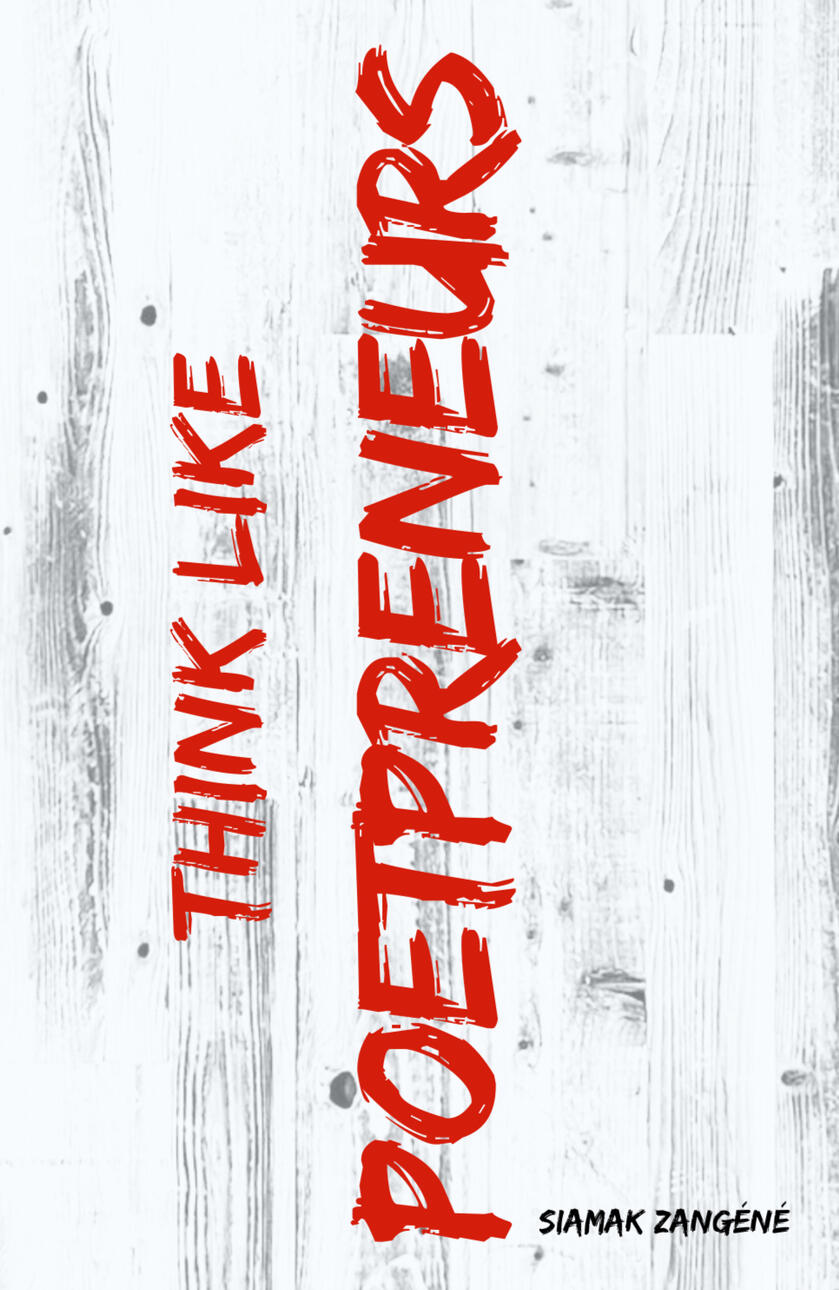
The future of work has a first principles dilemma.It needs a different kind of entrepreneur.Not just any —
the ones who build design-led companies.Entrepreneurship isn’t the backup plan to jobs.It’s foundational.The world doesn’t have a work problem.It has a shortage of POETPRENEURS.ENTREPRENEURSHIP, decoded.
WORK, decoded.
PASSION, decoded.
AUTONOMY, decoded.
INNOVATION, decoded.The egg came first. This book proves it.Discover on Amazon.If the book opens a question, the pages can't close — that's what the conversation is for.

about

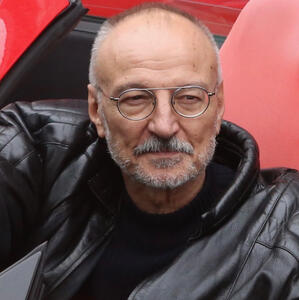
Meet Siamak
Most people who understand how technology companies get built don't trust the humanities. Most people who trust the humanities don't understand how companies actually get built. I've spent twenty years standing at that exact fault line, and it turned out to be the only place the real question was visible.A product design veteran who designed and shipped multimillion-dollar products for multinational companies across two decades in Silicon Valley. At the pinnacle of that career, I went to MIT Sloan, not for a credential, but for an answer. What I found instead was a confirmation: the design-led model that had quietly explained everything I'd witnessed in twenty years of practice was nowhere in the curriculum. The most elite business education in the world wasn't teaching it. That absence was the loudest signal I'd ever received. Twenty years of shipping real products had already taught me that the humanities aren't decoration, they're the load-bearing structure underneath every technology decision that actually holds at scale.Top business schools couldn't explain what I kept seeing: why certain companies dent the universe while better-funded incumbents optimize toward irrelevance, despite equal resources, equal talent, equal market access.Burning out at the pinnacle of "success" didn't just slow me down, it handed me the most honest data point I'd ever had. I had executed the conventional model from the inside. I knew exactly how it broke and why it broke quietly. That forced a more uncomfortable question: what if entrepreneurship itself had been misdefined into a soulless pursuit of over-optimization, systematically disconnected from what actually preserves human judgment and meaning at scale?A quest for the answer became an obsession, and eventually, a book. Why do design-led companies consistently outperform the S&P by more than 200%? Why does success so often conceal fragile human systems that fracture precisely when scale accelerates? The answer wasn't another strategy framework. It was how these companies are wired: Human, Innovation, and Autonomy in the right order. That became POETPRENEURS.No pure technologist writes that book. No pure humanist gets taken seriously enough to be heard. No academic writes it from the inside of twenty years of practice. The synthesis required standing in the middle long enough to see what neither side could, and being willing to pay the cost of that position.If you have always sensed that the dominant model of building companies, the one taught in business schools, celebrated in case studies, funded by the playbook, was optimizing for the wrong thing; if you believe that how a company is designed on the inside determines what it can become on the outside; if you've been told that meaning and scale are a trade-off rather than a design problem, this book was written for you.POETPRENEURS is not a business book. It is an applied philosophy for builders who refuse the false choice between craft and scale, between human judgment and organizational growth, between the timeless and the urgent. It is the framework that design-led companies have always operated by, made visible, made teachable, and made available to the next generation of founders who are ready to build differently.The argument is now in your hands.
resources
Selected Writings

Reset to 3025: The Millennium Gap in Business Performance

Business Burnout: Time To Embrace Design-Led Healing?

High Schools at a Crossroads

Stop Protecting Education's Obsolescence

High Schools Driving a Fresh Transformation

The Healicon Valley: Why Portugal Should Not Mimic Silicon Valley
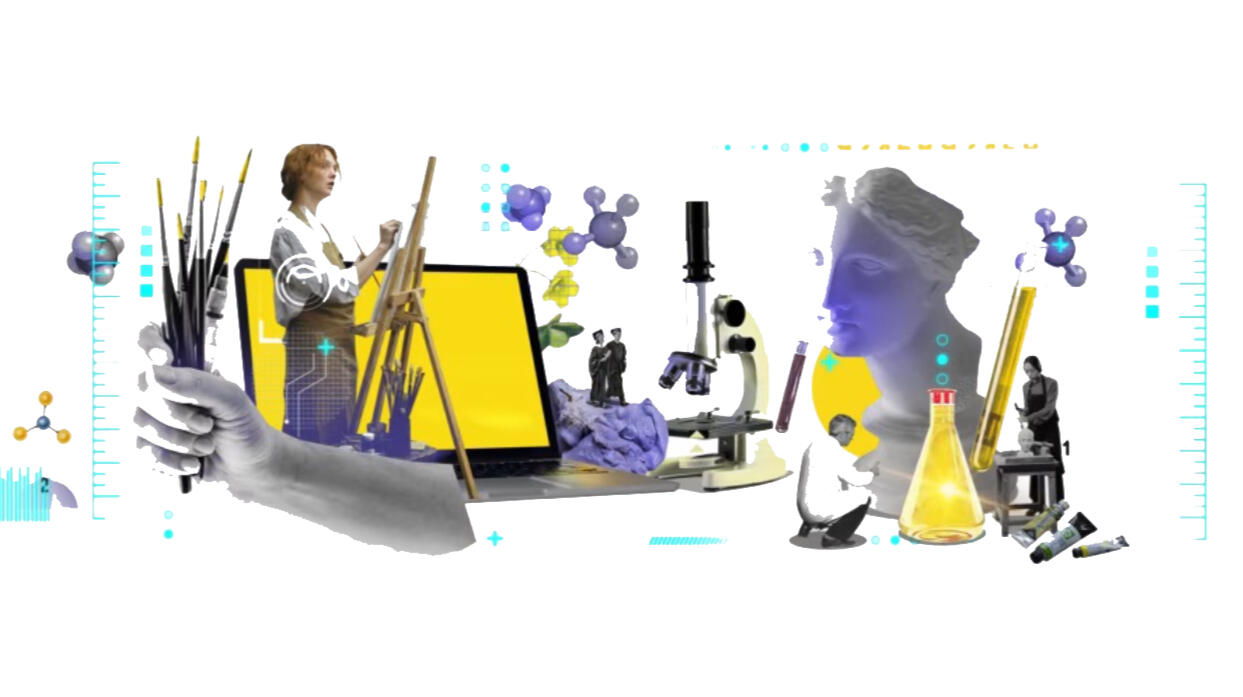
A tale of two cultures: must Britain choose between science and the arts?
The High Price of Efficiency
How do the best design performers increase their revenues ...
the art of
Decoding one of the world's most elusive abundances as it flips the script on age-old prominent definitions this model offers a beacon of clarity in a world clamoring for 'economics' healing' and sustainability.For generations, our dreams were standardized and institutionalized. But that era belongs to a different breed - the empathetic "imaginative" entrepreneurial healers.At the heart of this vantage point lies a nature-inspired, human-centric secret sauce. Plunge into a transformative journey and explore uncharted insights into the art of design-led entrepreneurship.

poetpreneurs'
Welcome to the pantheon of entrepreneurial creatives, from acorn to oak, dedicated to creating, transforming, and sustaining human-centric ventures that serve, beautify, and preserve wellness.
INDUCTEES
| SLS Design | Interiors by Sormeh |
| Howlin' Ray's | YOUR NAME HERE |
| YOUR NAME HERE | YOUR NAME HERE |
unwrap your entrepreneurial gift
The Next-Gen Creatives: more than ever, the community needs your entrepreneurial imaginativeness! And the potentials you bring to the world are limitless.You are economics' next secret weapon!From disruptive anger to disruptive innovation: economics' healing starts with YOU!

get started


Human is designed to sense. Small Businesses are the heartbeat of the soul economy. They provide engaging and soulful products and services that touch people. Their businesses thrive on three existential pillars:Product: The tangible creation with human intention
Ambiance: The intangible atmosphere and emotional environment
Service: The relational connection and personal touchAll three pillars are essential in creating memorable experiences that keep customers coming back and build lasting community connections.